
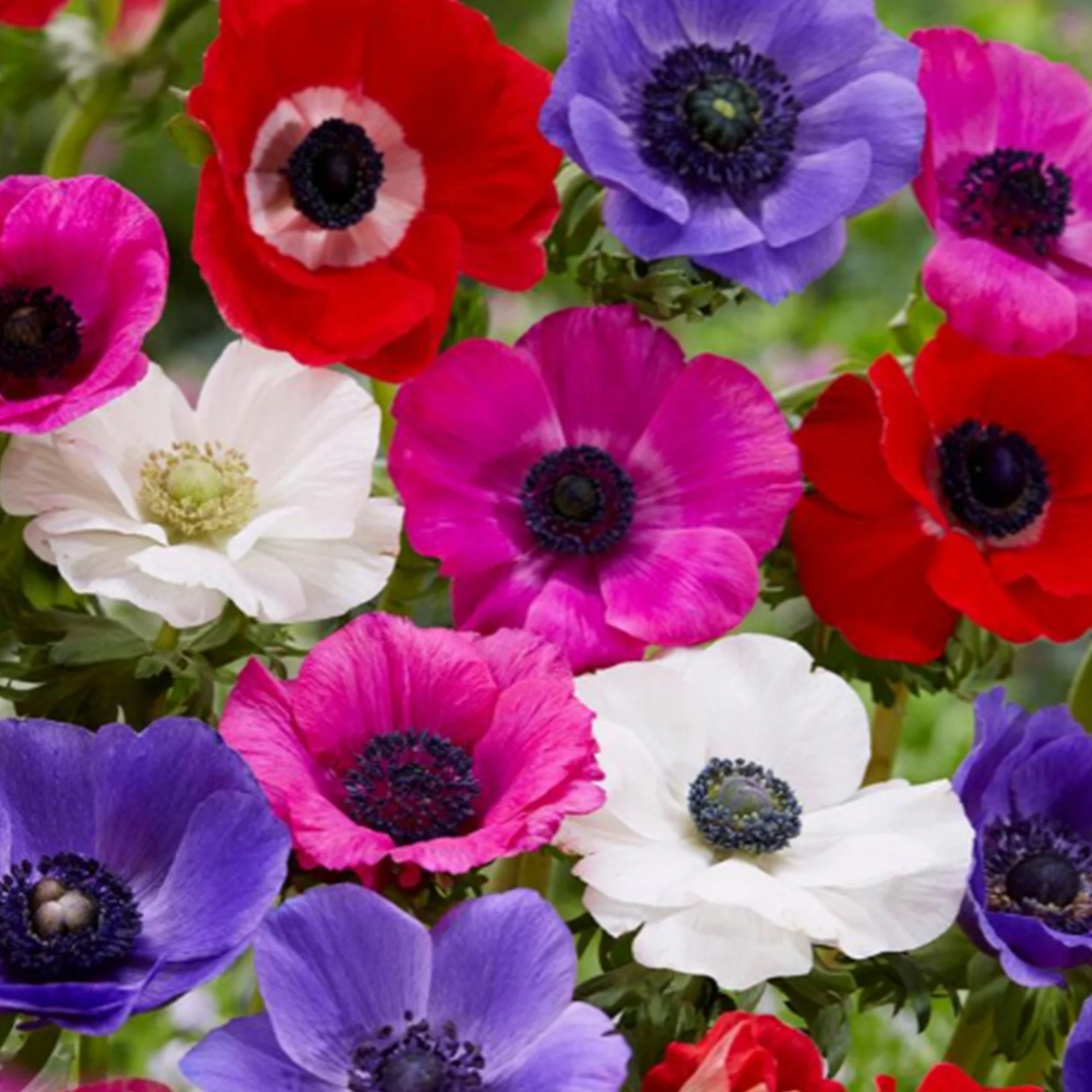
Spring, Planted in Fall
Planting Guidance, Care & Maintenance for Your New Bulbs.
WHEN TO PLANT
Plant bulbs in fall once soil temperatures have cooled to approximately 55–60°F. Soil temperature is a better guide than calendar dates alone, particularly in warmer climates.
As a general guide:
Zones 3–4: September–October
Zones 5–6: October–November
Zones 7–8: October–December
Zones 9–10: November–January
In warmer zones, tulips and hyacinths require a period of cold before planting to encourage flowering. If your bulbs have not been pre-chilled, follow the recommended chilling period before planting.
Daffodils, alliums, and anemones are generally more adaptable to mild-winter climates.
WHERE TO PLANT
FULL SUN
Best with 6+ hours of direct sun:
Tulips
Alliums
Anemones
Full sun generally produces the strongest stems and best flowering. In warmer climates, some afternoon shade can help extend bloom life.
SUN TO PART SHADE
Best with 4–6 hours of sun, including morning sun or filtered light:
Daffodils
Hyacinths
These bulbs can tolerate some light shade, although more sun generally produces stronger flowering. Avoid locations that remain wet after rain.
HOW TO PLANT
Choose loose, well-drained soil. Remove weeds and competing roots and loosen the soil before planting.
Plant bulbs with the pointed end facing upward. As a general rule, plant bulbs approximately 2–3 times as deep as the bulb is tall. Smaller bulbs and corms should be planted more shallowly than larger bulbs.
Space bulbs according to the desired effect. For a fuller display, plant bulbs in groups or drifts rather than evenly spaced rows.
After planting, water thoroughly to settle the soil and encourage root development.
WATERING & MAINTENANCE
Keep newly planted bulbs evenly moist while they establish roots, but never allow them to sit in consistently wet soil.
Once established, natural rainfall is generally sufficient unless conditions are unusually dry. During active growth in late winter and spring, water when the soil begins to dry.
Avoid excessive irrigation during warm or rainy periods.
AFTER BLOOM
Remove spent flowers as they fade, particularly on tulips and hyacinths. Leave the foliage in place. Green leaves continue to replenish the bulb for the following season.
Allow foliage to yellow and die back naturally before cutting it to the ground.
Daffodils and alliums can often return reliably for several years when planted in suitable conditions. Tulips and hyacinths may be less reliable as perennial bulbs, particularly in warmer climates.
A NOTE FOR WARMER CLIMATES
Tulips and hyacinths require winter chilling to flower properly. In Zones 8–10, bulbs may need to be pre-chilled before planting unless they have already received adequate chilling from the supplier.
Keep bulbs refrigerated at approximately 35–45°F during chilling and away from ripening fruit, particularly apples, which release ethylene gas.
Bloom time and performance will vary with climate, soil, planting depth, moisture, and seasonal weather.